
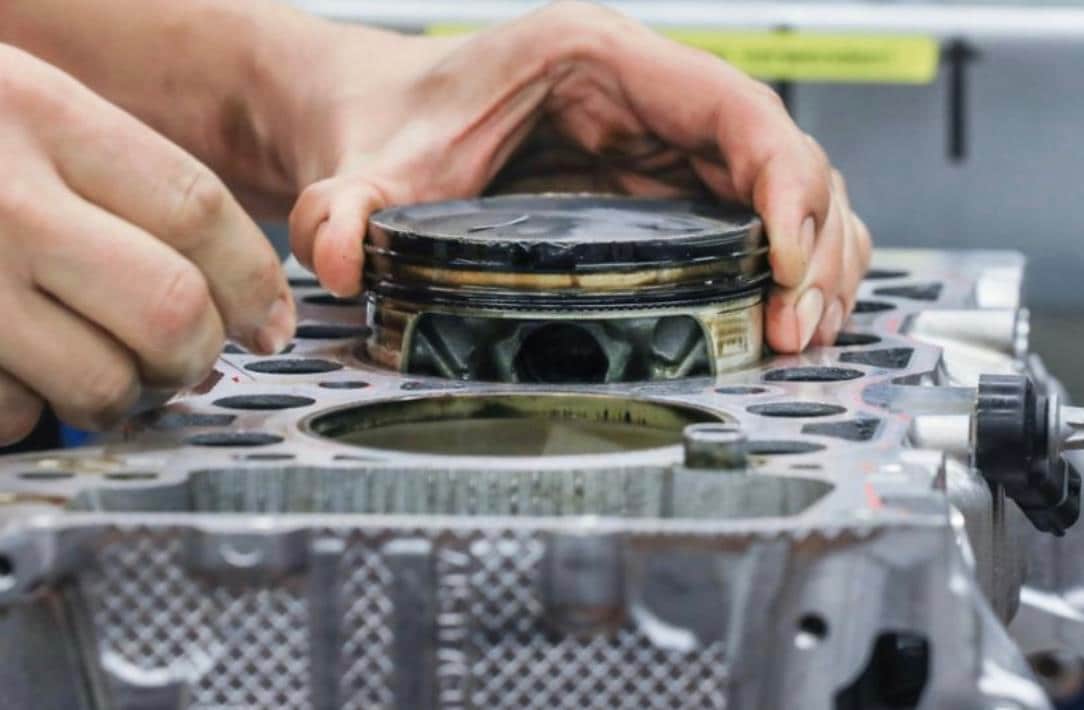
With its use of additive manufacturing processes for highly-stressed drive components, Porsche is establishing a new milestone in cooperation with its partners Mahle and Trumpf. While 3D printing technology has already been previously used at the sports car manufacturer in prototype construction for manufacturing spare parts for classic sports cars, the GT2 RS, the pistons for the high-performance engine of the 911 flagship model are now being produced with a 3D printer.
Through 3D printing, the pistons can be manufactured with a structure that is ultimately optimized for the loads acting on the pistons. This allows the pistons from the advance development project to weigh an entire ten percent less than had the pistons been produced via forged series production. In addition to the 3D printing, a closed cooling duct has also been integrated in the piston crown that would not have been able to have been produced by conventional methods.
Frank Ickinger from the advance drive development department at Porsche, explains how with the new, lighter pistons, “we can increase the engine speed, lower the temperature load on the pistons and optimize combustion,” making it possible to “get up to 30 PS more power from the 700 PS Biturbo engine, while at the same time improving efficiency.”
Manufactured from high-purity metal powder, the pistons of the 911 GT2 RS use the laser metal fusion process, known as LMF. This is when a laser beam heats and then melts the powder surface that corresponds to the part contour. For maximized quality and performance capabilities, the components were validated using Zeiss’ measurement technology.
There is already a wide application field and new potential uses for 3D printing at Porsche. For example, a 3D-printed body form bucket seat for the model series 718 and 911 has already been available since May. Here, the cushion and backrest surfaces are partly produced by a 3D printer. Customers will also be able to choose between three different firmness levels (soft, medium, hard) for the comfort layer in the future.
Categories:
News