
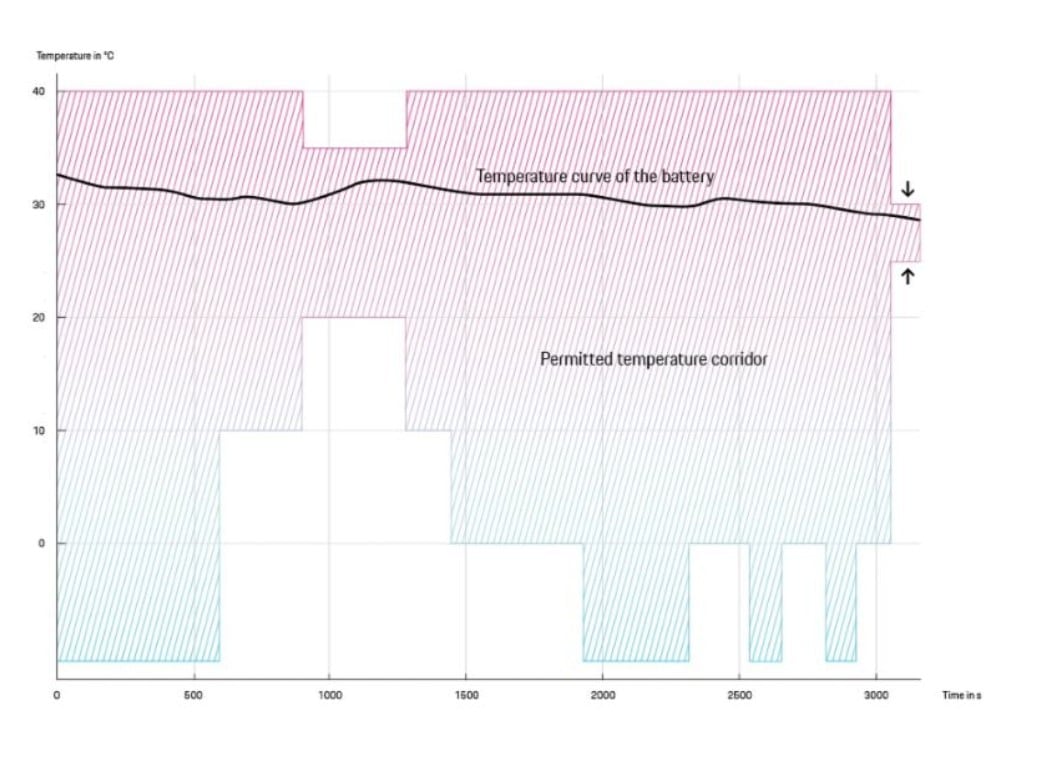
To charge at maximum power, batteries must be at the optimum temperature. Porsche Engineering’s forward-looking thermal management recognizes the importance of providing the right battery temperature and is carefully designing energy storage devices that are in the best possible temperature range at the charging station.
Porsche’s Engineering’s predictive thermal management system is promising shorter battery charging times and longer ranges: the ideal duo. Ensuring optimal temperatures for stopping at the charging station, this technology provides all the right ingredients for fast charging and maximum battery power.
Temperature is critical because if the cells are too cold or too hot, charging performance drops. Butt with predictive thermal management, this could be an issue of the past. The software in the car will be capable of predicting the upcoming course of the trip and will then control all thermal components, creating the optimum temperature for the battery. This will also prevent unnecessary cooling or heating, saving energy, and increasing the range.
Lead Engineer Thermal Management Bjorn Pehnert emphasizes the critical forward-thinking necessary to create such innovative thermal management solutions,
“In order to get the battery to the right temperature for charging, the vehicle’s control system has to look further into the future than it does now.” — Bjorn Pehnert, Lead Engineer Thermal Management
In order to accomplish bringing the large battery in electric vehicles to the right temperature for speedy charging, it is imperative that the vehicle control system must detect potential loads in advance. This was the engineers’ most challenging task but was not impossible. They developed a predictive thermal management system that predicts the temperatures of the battery for the upcoming trip. Additionally, thanks to innovative optimization, this software runs on a normal control unit, rather than needing powerful mainframe computers for such complex calculations in real-time.
The project has now been completed, and the concept study has shown thermal management having high potential for series development and, in the future, can be installed in a customer vehicle. Test drives have shown great potential for the solution’s series development.
Categories:
News